GPT-5

The OpenAI Code Red: What’s Next for the Generative AI Market?

In late November 2022, OpenAI released ChatGPT. It has been three years since then, and just as it was about to celebrate its third birthday, an event occurred that dampened the celebratory mood. CEO Sam Altman declared a "CODE RED" (Emergency) (1). The driving force behind this was the breakthrough of the new generative AI, "Gemini 3" (2), released by Google on November 18. Today, I would like to delve into this theme and forecast the generative AI market for 2026. Let’s get started.


1. Gemini 3 vs. GPT-5

On August 6, 2025, OpenAI released GPT-5. Since it was the first major update since GPT-4, people had very high expectations. However, in reality, it was difficult to perceive a significant difference compared to other models. Although it managed to update scores across various benchmarks, the impression was that its impact felt somewhat muted compared to the arrival of GPT-4.

Of course, it is evolving steadily, so if rival companies' models had remained stagnant, I believe it could have celebrated its third birthday peacefully. However, the moves made by its rival, Google, surpassed our expectations. On November 18, 2025, Gemini 3 was released, and everyone was astonished by its high performance. Its scores in almost all benchmarks surpassed those of GPT-5, and for the first time since the birth of ChatGPT, GPT-5 lost its "technological competitive advantage." The battle surrounding generative AI has entered a new phase.


2. Why Gemini 3 is Particularly Superior

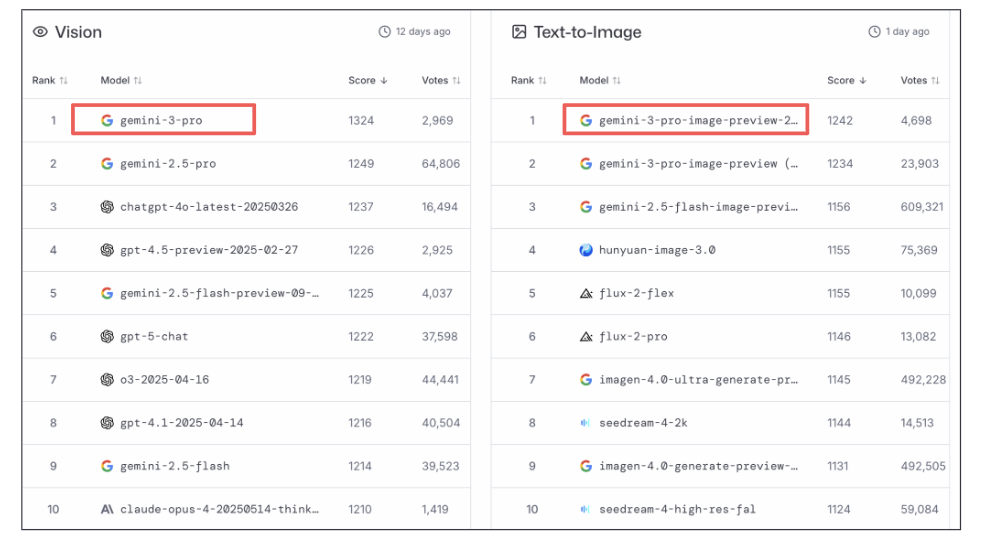
There are several technical talking points, but what I am paying special attention to is its high capability in image processing and generation. As shown in the leaderboard (3) below, its strength is overwhelming and unrivaled. The famous image generation app Nano Banana Pro is officially named Gemini 3-Pro-Image, and its high scores truly stand out.
                        Leaderboard

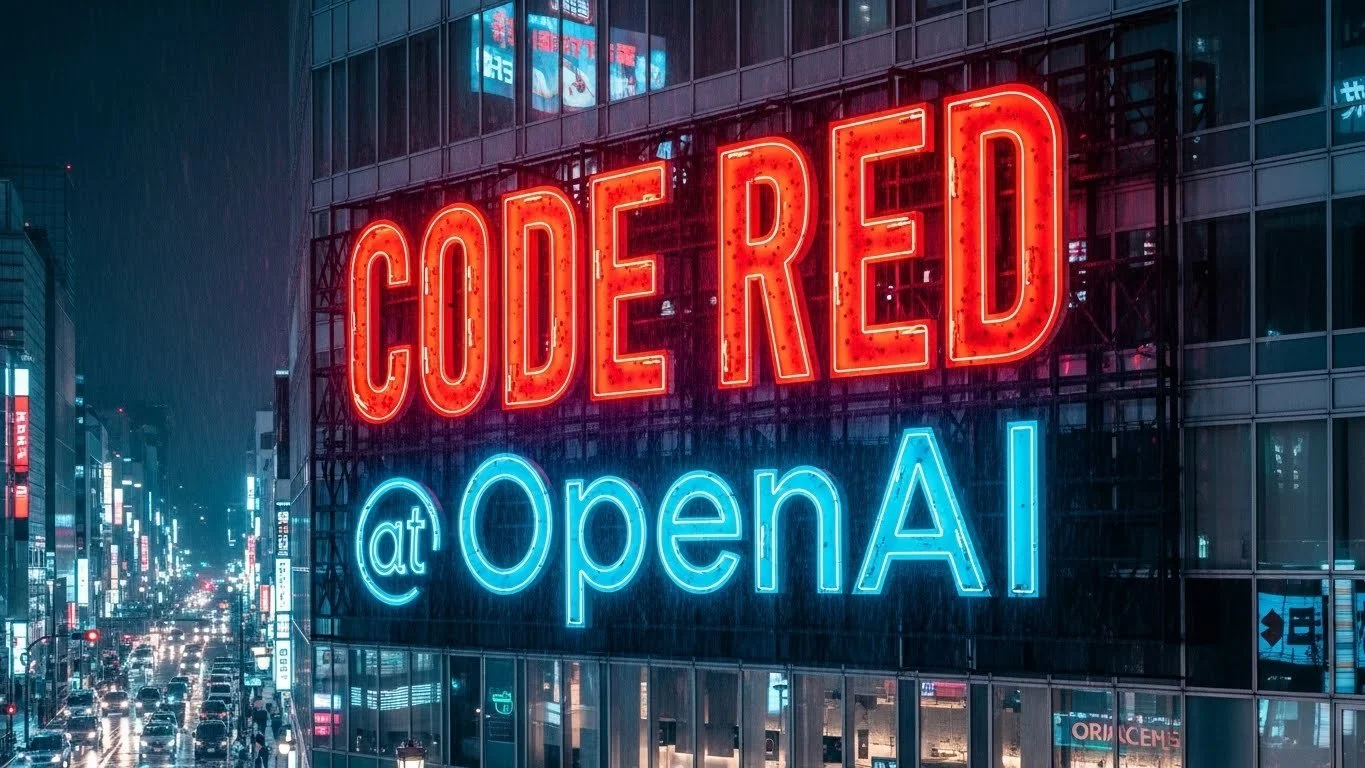
When considering individual customers, the ability to easily generate and edit images exactly as envisioned is crucial and can serve as a "killer app." I feel that once individuals experience the technical level of Gemini 3, they will find it difficult to easily switch back to competitor apps. The image below was generated using Nano Banana Pro. As you can see, it has become easy to render both English and Japanese text together on an image. Previously, Japanese text was often incomplete or incomprehensible, so it was quite moving to see clean Japanese generated for the first time.

                   Image generated by Nano Banana Pro


3. The Generative AI Market in 2026

With Sam Altman issuing a CODE RED, I believe OpenAI will allocate significant development resources to improving the model itself and will frantically work to close this gap in the image generation field. On the other hand, Google, armed with Gemini 3, possesses several multimodal generative AI models beyond just Nano Banana Pro, and I expect them to leverage that expertise to aim for further breakthroughs.

In particular, generative AI capable of simulation using 3D structures—known as World Models—will likely influence Large Language Models (LLMs) as well, solidifying Google's competitive advantage. One has to admit that Google, which owns YouTube, is incredibly strong in this field. It looks like 2026 will be a year where we cannot take our eyes off how OpenAI launches its counterattack.


How was it? While there are several other players creating generative AI, I believe the industry style will involve companies defining their own positions within the context of the "OpenAI vs. Google" battle. Therefore, the outcome of OpenAI vs. Google is extremely important for all AI-related companies. I would like to write another blog post on this same theme if the opportunity arises.

That’s all for today. Stay tuned!


You can enjoy our video news ToshiStats-AI from this link, too!


1) Sam Altman’s ‘Code Red’ Memo Urges ChatGPT Improvements Amid Growing Google Threat, Reports Say, Forbes, 2 Dec 2025
2) A new era of intelligence with Gemini 3, Google, 18 Nov 2025
3)  Leaderboard Overview


Copyright © 2025 Toshifumi Kuga. All right reserved

Notice: ToshiStats Co., Ltd. and I do not accept any responsibility or liability for loss or damage occasioned to any person or property through using materials, instructions, methods, algorithms or ideas contained herein, or acting or refraining from acting as a result of such use. ToshiStats Co., Ltd. and I expressly disclaim all implied warranties, including merchantability or fitness for any particular purpose. There will be no duty on ToshiStats Co., Ltd. and me to correct any errors or defects in the codes and the software.

Unlocking Sales Forecasts: Can GPT-5 Reveal the Most Important Data?

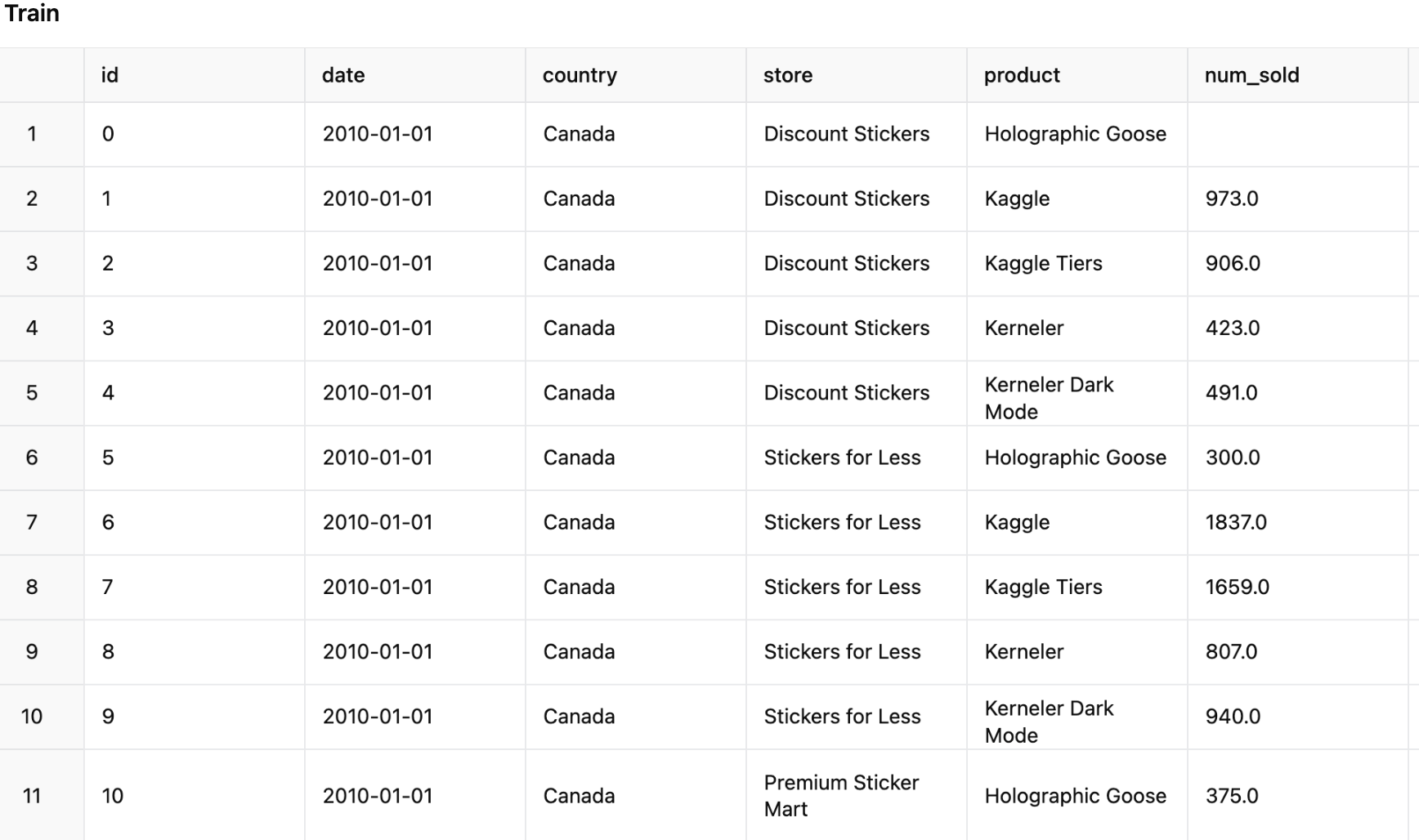
Have you ever found yourself in marketing, wanting to predict sales and gathering a ton of data? For example, let's say you have sticker sales data (1) like the set below. The num_sold column represents the number of units sold. This is actually a large dataset with over 200,000 entries. So, among these data columns (which we call "features"), which one is the most important for predicting sales? They all seem important, and it's impossible to check all 200,000 records one by one. So, let's try asking the generative AI, GPT-5.

                         Sticker sales data


1. Asking GPT-5 with a Prompt

To identify the important features for a prediction, you first have to create a predictive model. This is a task that data scientists perform all the time. However, they usually create these models by coding in Python, which can be a high barrier for the average business person. So, isn't there an easier way? Yes, and this is where prompts come in handy. If you can give instructions to GPT-5 with a prompt, no coding is necessary. Here is the prompt I created for this task.

     data & prompt

Key points of the prompt:

  • Use HistGradientBoostingRegressor from sklearn.

  • Evaluate the error using mean_absolute_percentage_error.

  • Split the data into train-data and test-data at an 80:20 ratio.

  • Display the top 10 feature importances with their original variable names.

  • Print the results as numerical output.

By getting the top 10 feature importances, we can understand which data column is the most significant. I won't explain the predictive model itself this time, so for those who want to dive deeper, please refer to a machine learning textbook.


2. The Code Actually Being Executed

Based on the prompt above, GPT-5 generated the following Python code on its own. It might look complicated to non-specialists, but rest assured, we don't have to touch Python at all. However, we can review this code to see how the calculation is being done, so it's by no means a black box. I believe this transparency is very important when using GPT-5 in a business context.

                 GPT-5's code for building the prediction model


3. "Product" Was the Most Important!

Ultimately, we got the following result.

Feature Importance Ranking

A higher "importance" value in the table above means the feature is more significant. This analysis revealed that "product" was overwhelmingly important. It seems that thinking about "what is selling" is essential. This is followed by "store" and "country". This suggests that considering "in what kind of store" and "in which country" is also crucial.

                     feature importance ranking


So, what did you think? This time, we instructed GPT-5 with a prompt to calculate which features are most important for predicting sales. It's true that you might run into errors along the way that GPT-5 has to correct itself, so I felt that having some basic knowledge of machine learning is beneficial. However, we were able to get the result without the user having to write any Python, which means marketing professionals can start trying this out today. I hope you can use the method we introduced today in your own marketing work. That's all for now. Stay tuned!


You can enjoy our video news ToshiStats-AI from this link, too!


1)Forecasting Sticker Sales, kaggle, January 1,2025


Copyright © 2025 Toshifumi Kuga. All right reserved

Notice: ToshiStats Co., Ltd. and I do not accept any responsibility or liability for loss or damage occasioned to any person or property through using materials, instructions, methods, algorithms or ideas contained herein, or acting or refraining from acting as a result of such use. ToshiStats Co., Ltd. and I expressly disclaim all implied warranties, including merchantability or fitness for any particular purpose. There will be no duty on ToshiStats Co., Ltd. and me to correct any errors or defects in the codes and the software.

How to Turn GPT-5 into a Pro Marketing Analyst with AI Agents!

A while back, I introduced a guide to prompting GPT-5, but it can be quite a challenge to write a perfect prompt from scratch. Not to worry! You can actually have GPT-5 write prompts for GPT-5. Pretty cool, right? Let's take a look at how.


1. Using GPT-5 to Do a Marketer's Job

I have some global sales data for stickers(1). Based on this data, I want to develop a sales strategy.

                 Global Sticker Sales Records

In a typical company, a data scientist would analyze the data, and a marketing manager would then create an action plan based on the results. We're going to see if we can get GPT-5 to handle this entire process. Of course, this requires a good prompt, but what kind of prompt is best? This is where it gets tricky. The principle I always adhere to is this: "Data analysis is a means, not an end." There are many data analysis methods, so the same data can be analyzed in various ways. However, what we really want is a sales strategy that boosts revenue. With this in mind, let's reconsider what makes a good prompt.

It's a bit of a puzzle, but I've managed to draft a preliminary version.


2. Using Metaprompting to Improve the Prompt with GPT-5

Now, let's have GPT-5 improve the prompt I quickly drafted. The image below shows the process. The first red box is my draft prompt.

                    Metaprompt

The second red box explicitly states the principle: "Perform data analysis with the goal of creating a Marketing strategy." When you provide the data and run this prompt, GPT-5 creates the improvement suggestions you see below, which are very detailed. I actually ran this process twice to get a better result.

                   Final Prompt


3. The Result: GPT-5 Generates MARKETING Strategy!

Running the final prompt took about a minute and produced the following output. The detailed analysis and resulting insights are directly connected to marketing actions, staying true to our initial principle. It's fantastic.

The output is concise and perfect for busy executives. Creating this content on my own would likely take an entire day, but with GPT-5, the whole process—including the time it took to draft the initial prompt by myself —takes only about 30 minutes. This really shows how powerful GPT-5 is.


What do you think? This time, we explored a method for getting GPT-5 to improve its own prompts. This technique is called Metaprompting, and it's described in the OpenAI GPT-5 Prompting Guide (2).

I encourage you to try Metaprompting starting today and take your AI agent to the next level. That's all for now! Stay tuned!


You can enjoy our video news ToshiStats-AI from this link, too!


Copyright © 2025 Toshifumi Kuga. All right reserved

1)Forecasting Sticker Sales, kaggle, January 1,2025

2) GPT-5 prompting_guide, OpenAI, August 7, 2025


Notice: ToshiStats Co., Ltd. and I do not accept any responsibility or liability for loss or damage occasioned to any person or property through using materials, instructions, methods, algorithms or ideas contained herein, or acting or refraining from acting as a result of such use. ToshiStats Co., Ltd. and I expressly disclaim all implied warranties, including merchantability or fitness for any particular purpose. There will be no duty on ToshiStats Co., Ltd. and me to correct any errors or defects in the codes and the software.