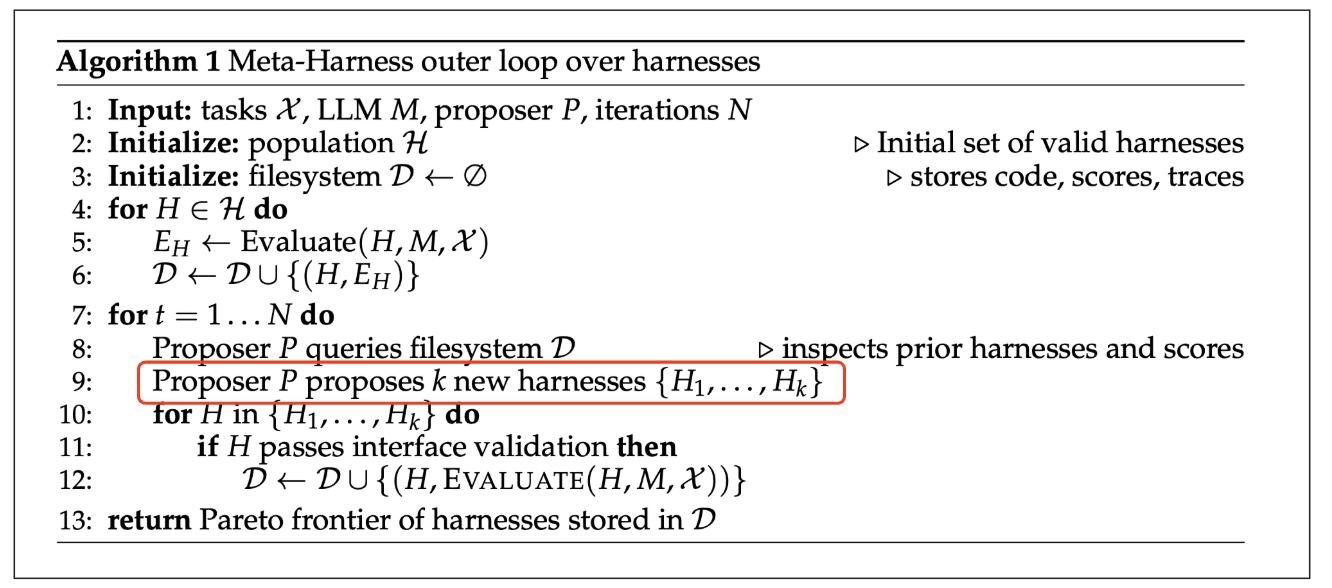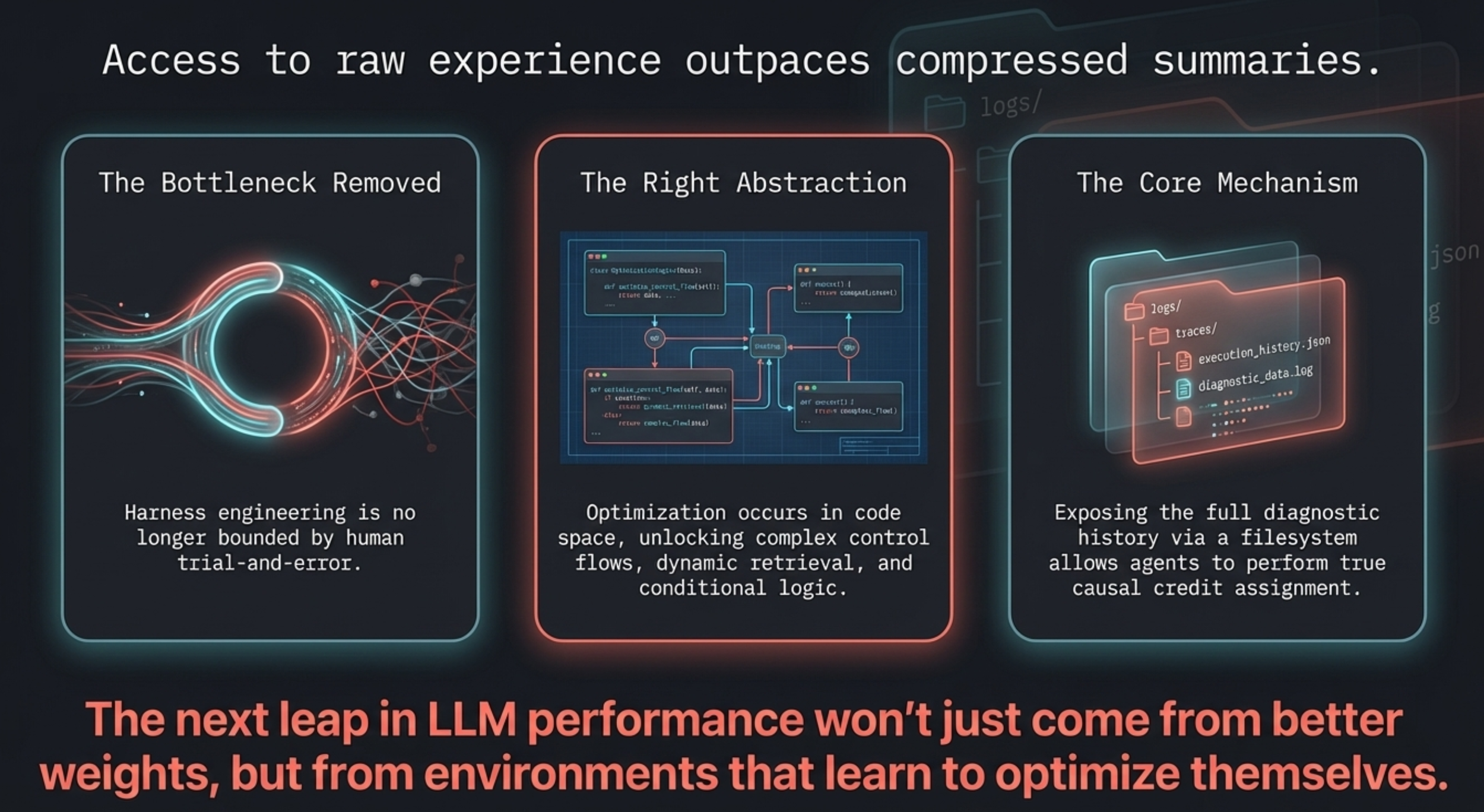
Recently, "loops" seem to be coming up a lot in the agentic coding community. In programming, a loop typically means repeating the same process over and over using a for statement, but here it refers to AI agents repeatedly cycling through the same process. Because this is a highly important foundational technology for predicting the future development of AI, I'd like to dive right in and explore it.
1. Loops Are Becoming a Hot Topic
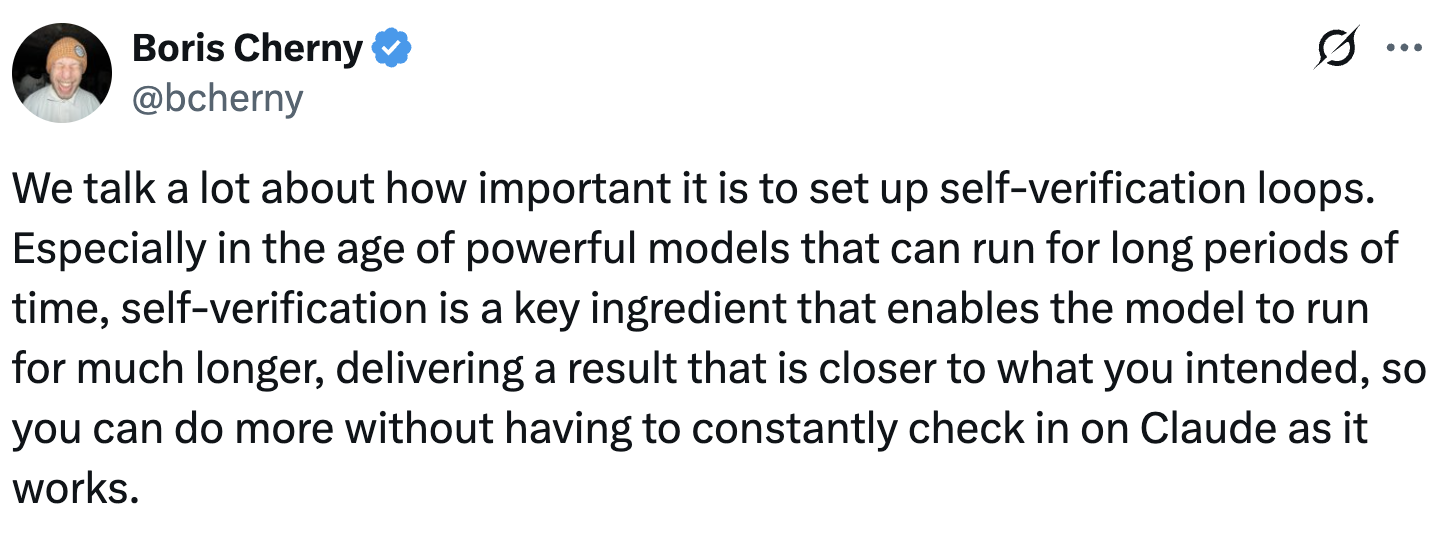
Boris Cherny, the creator of ClaudeCode, has recently been talking about the importance of "loops" in interviews and on X (1). It seems he himself has been getting most of his work done using loops lately. Given that the new generation of generative AI models can operate continuously for hours, it makes sense that they can churn through tasks using loops.
2. Feedback Descent
To dive deeper into loops theoretically, I would like to introduce a research paper. It outlines a method called Feedback Descent (2), which aims to optimize text generations using words in a semantic space.
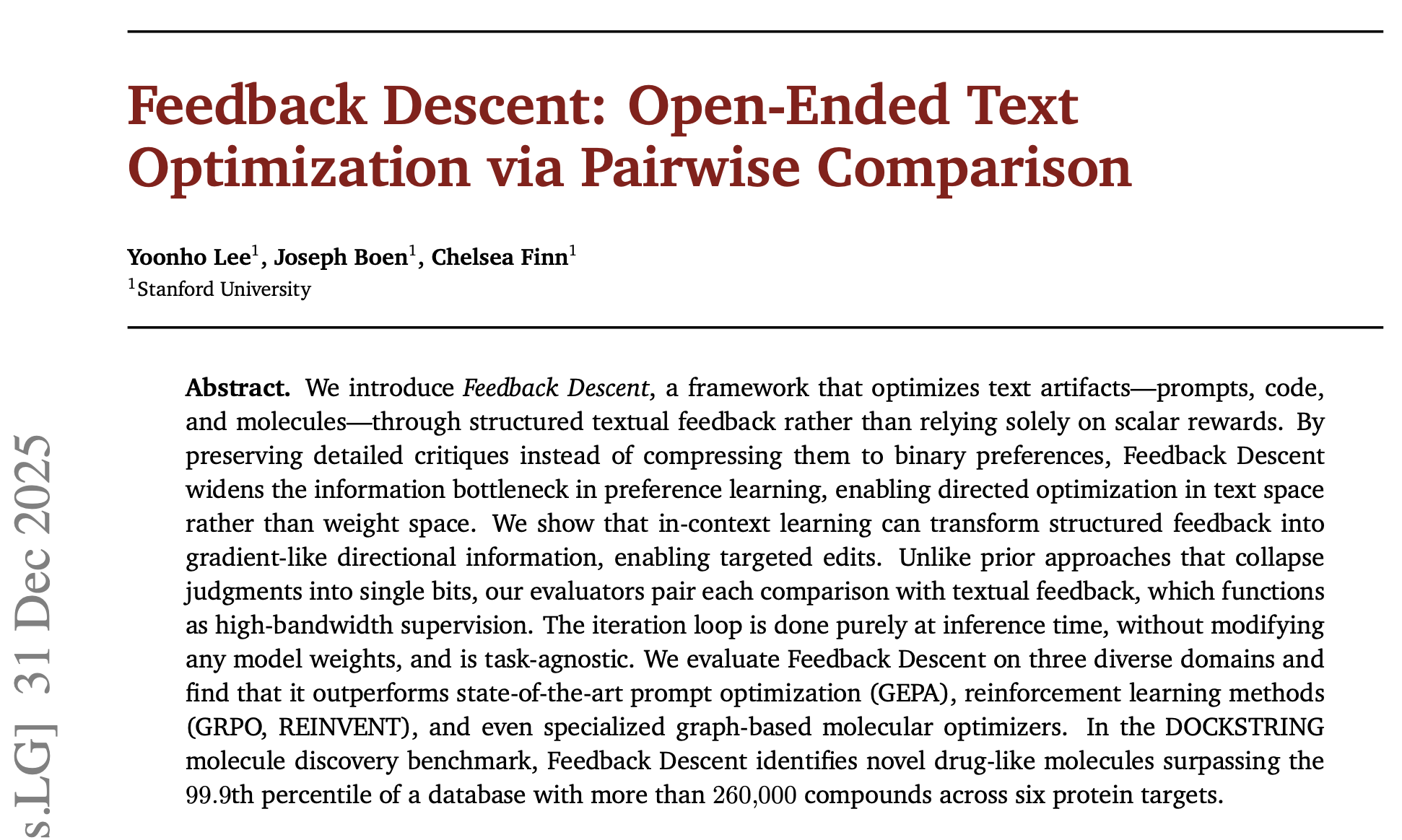
Feedback Descent
In the world of machine learning, optimization is often done using "gradient descent," which utilizes the gradient of a loss function. In this method, however, feedback is received in text form and used as a hint to devise improvement strategies for the next loop. Therefore, I believe they borrowed the naming convention from the machine learning world to call it Feedback Descent.
In the explanatory diagram below, Illustration A and Illustration B are compared as a pair, and the chosen one—along with the reason for its selection—is returned as text feedback. In the next loop, the prompt is devised based on that feedback, allowing for the creation of more accurate and effective prompts. This clearly defines the direction of prompt generation conducted in a loop. Brilliant!
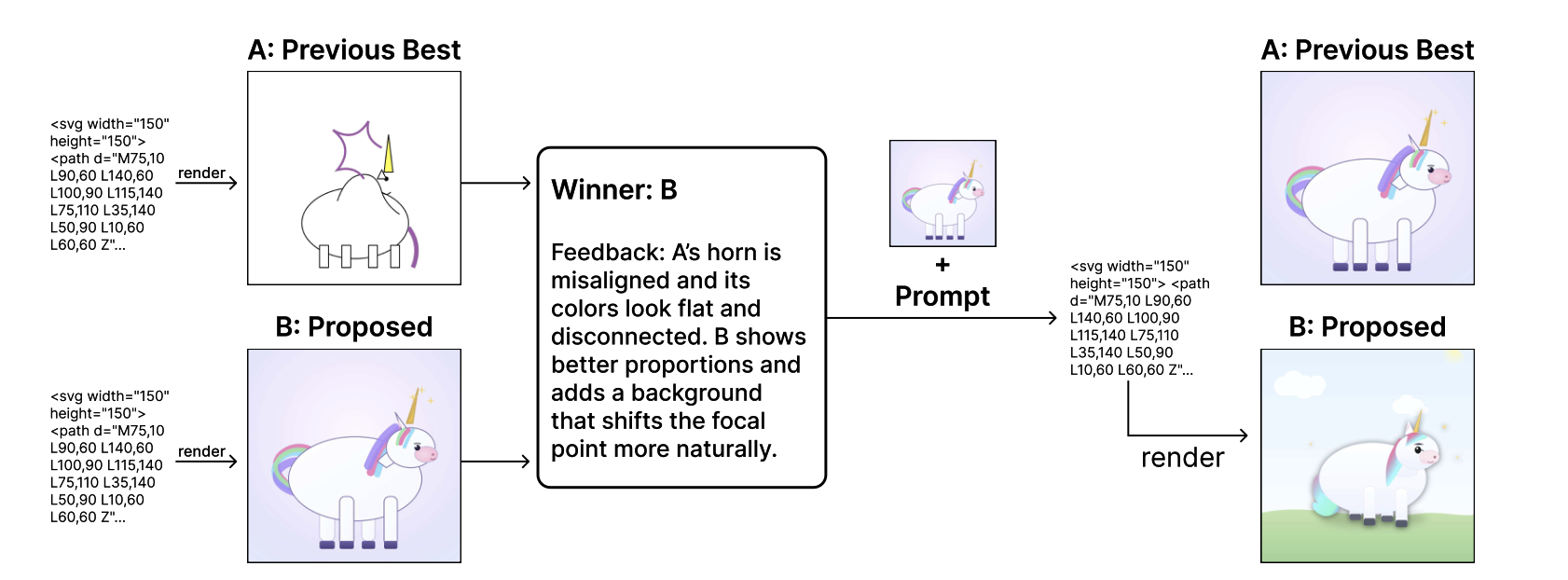
Text Optimization via Pairwise Comparison
I have included the algorithm below. It features a very simple structure.
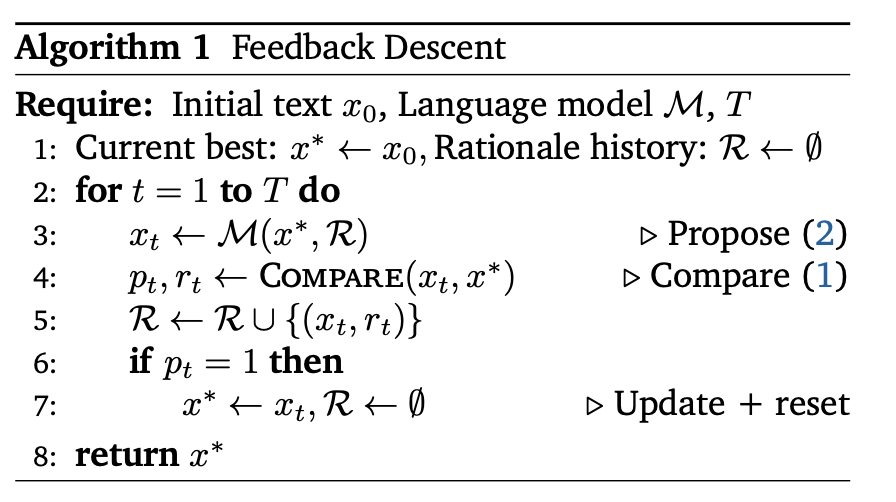
Feedback Descent Algorithm
3. Recursive Self-Improvement
Algorithms that self-improve by running loops like Feedback Descent have been published one after another recently. Furthermore, with the emergence of the latest generative AIs like Fable5, AI agents can now operate for increasingly longer periods, and we can assume the effects of self-improvement will grow even larger. Ultimately, the method known as "Recursive Self-Improvement" will take root, and the performance of AI agents will likely increase exponentially without human intervention.
As a result, I believe we are finally approaching the era of AGI step by step. I am sure many of you recognize this graph. It is from a paper (3) released in June 2024 by former OpenAI researcher Leopold Aschenbrenner, predicting that an AGI rivaling the capabilities of human experts in various fields will arrive in 2027.
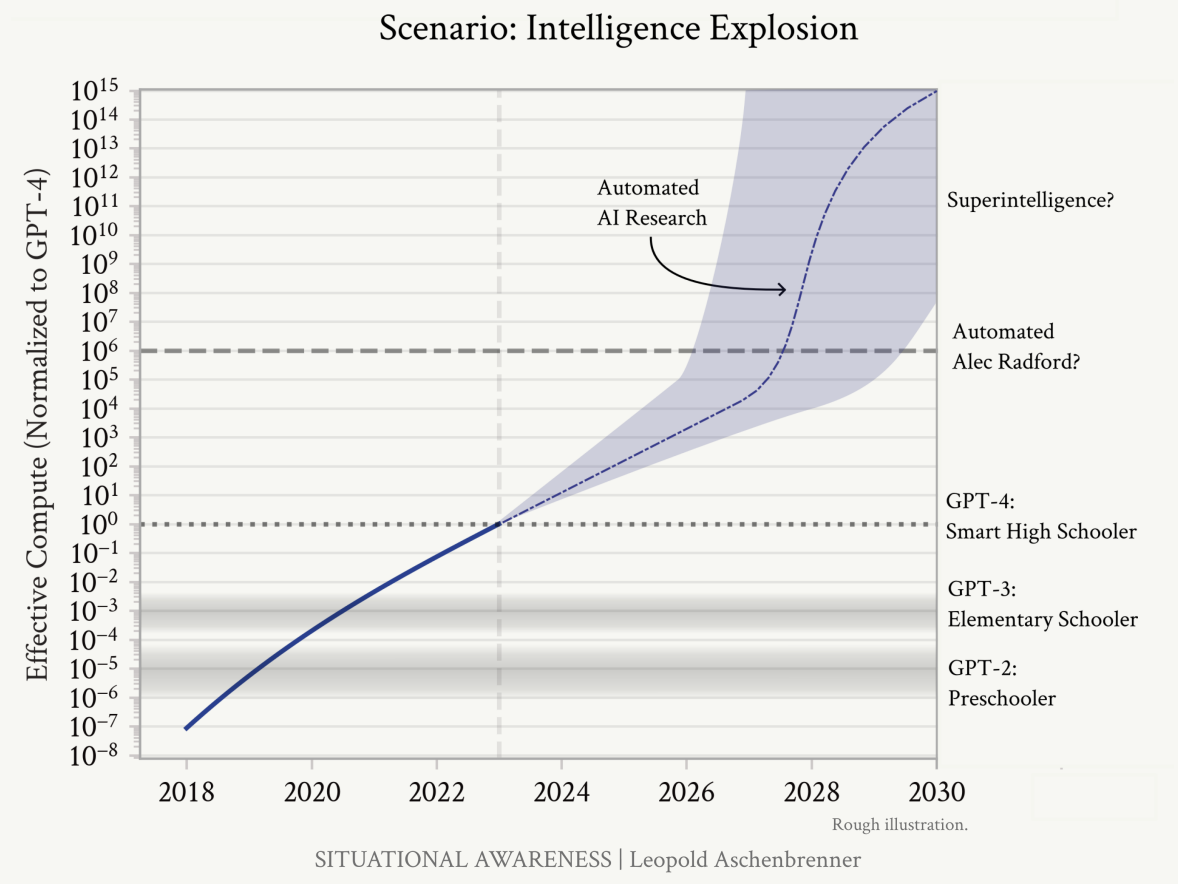
Actually, I featured this graph on my blog two years ago, in June 2024. Two years have passed since then, but I think that prediction is turning out to be quite accurate. It's truly amazing. I would like to share his words from two years ago here once more:
"Again, critically, don’t just imagine an incredibly smart ChatGPT: unhobbling gains should mean that this looks more like a drop-in remote worker, an incredibly smart agent that can reason and plan and error-correct and knows everything about you and your company and can work on a problem indepen-dently for weeks. We are on course for AGI by 2027. These AI systems will basically be able to automate basically all cognitive jobs (think: all jobs that could be done remotely).”
What did you think? I believe the fact that loops have recently become such a hot topic suggests we are steadily walking the path toward AGI. I am looking forward to the future progress of AI agents.
Here at Toshi Stats, we want to continue challenging new algorithms for "Recursive Self-Improvement." Stay tuned!
You can enjoy our video news “ToshiStats AI Weekly Review” from this link, too!
1) https://x.com/bcherny/status/2064426115255730578
2) Feedback Descent: Open-Ended Text Optimization via Pairwise Comparison, Yoonho Lee, Joseph Boen, Chelsea Finn, Stanford University, 31 Dec 2025
3) SITUATIONAL AWARENESS: The Decade Ahead, Leopold Aschenbrenner, June 2024
Copyright © 2026 ToshiStats Co., Ltd. All right reserved.
Notice: This is for educational purpose only. ToshiStats Co., Ltd. and I do not accept any responsibility or liability for loss or damage occasioned to any person or property through using materials, instructions, methods, algorithms or ideas contained herein, or acting or refraining from acting as a result of such use. ToshiStats Co., Ltd. and I expressly disclaim all implied warranties, including merchantability or fitness for any particular purpose. There will be no duty on ToshiStats Co., Ltd. and me to correct any errors or defects in the report, the codes and the software.