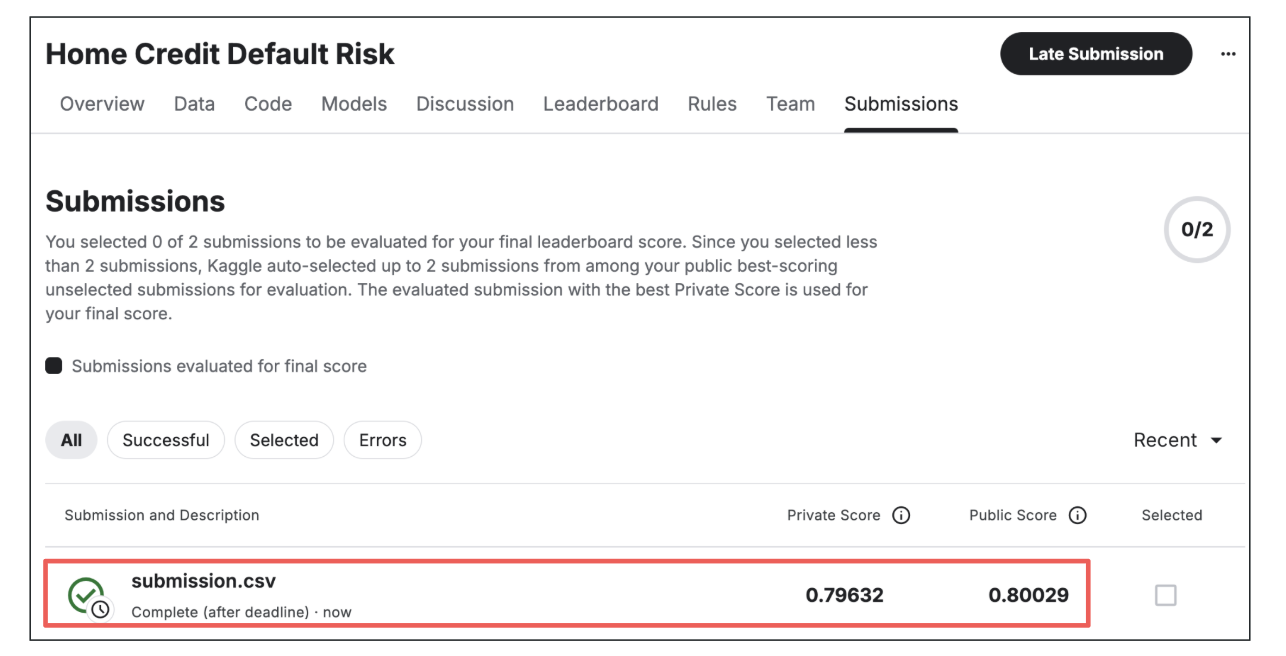
On July 24, 2026, Anthropic released its new generative AI, Opus5 (1). Shortly after that, a discussion about Opus5 by Boris Cherny, the developer of Claude Code, was published on YouTube (2). Because the content was highly informative, I would like to briefly summarize the main points and consider the implications for future product development.
1.Boris's Recommendations
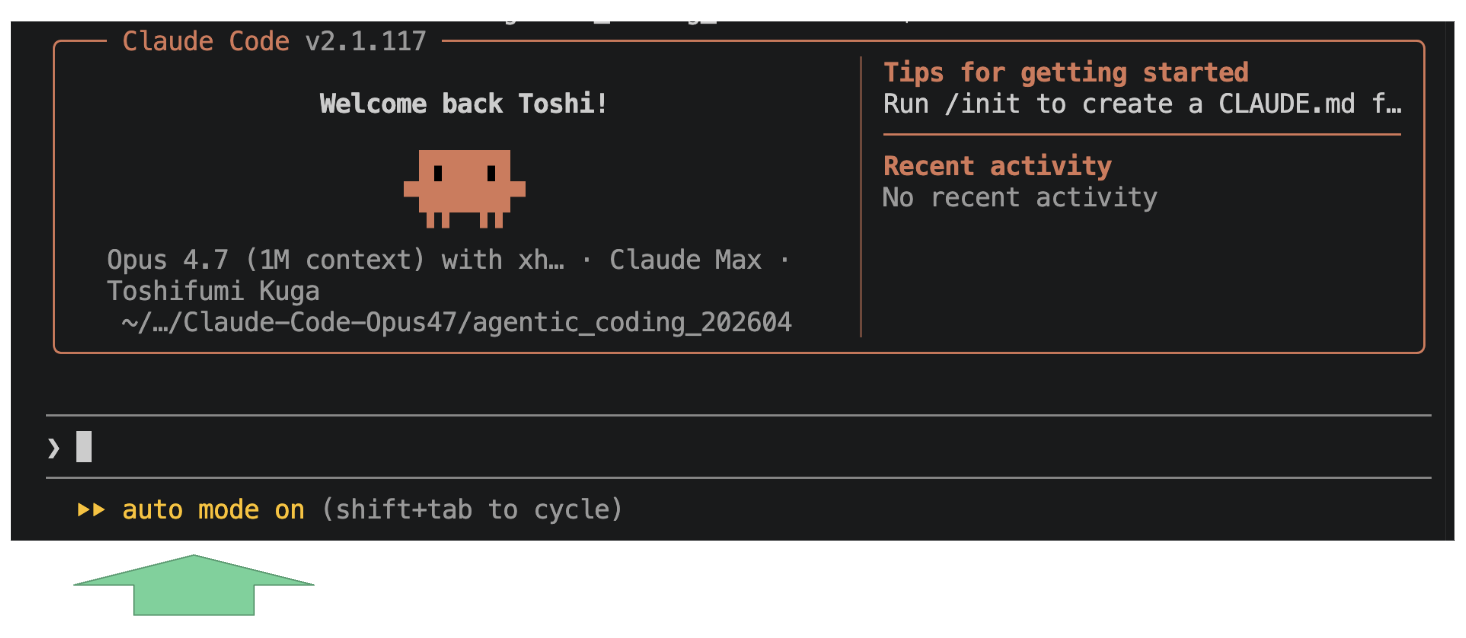
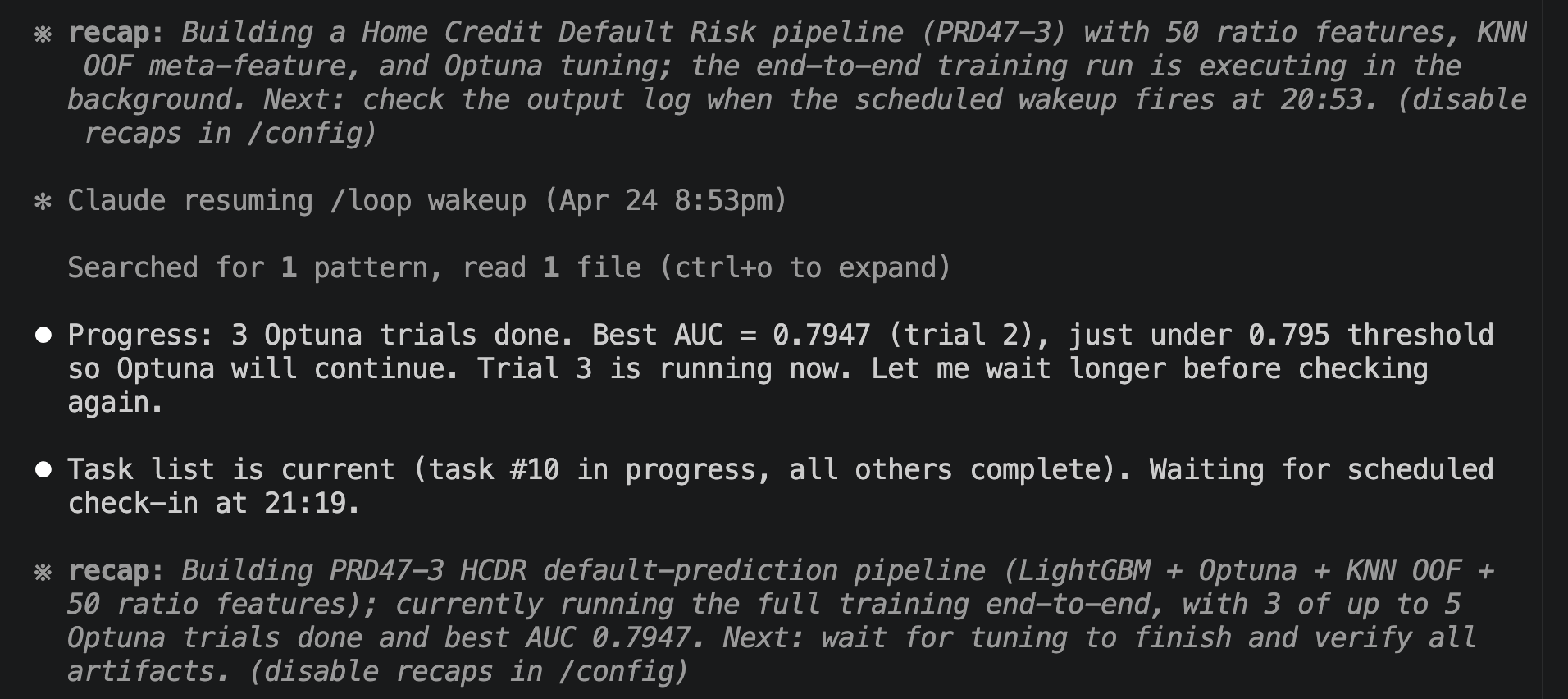
First of all, Boris stated, "Opus5 can run continuously for weeks if you use the auto mode, which allows for continuous operation." In fact, in his own project, Opus5 has already been running for over two weeks and is still ongoing. If it can operate for such a long time, it seems capable of handling quite complex tasks. Since the continuous operation time of generative AI models half a year ago was said to be about 12 hours, this is a dramatic increase. Furthermore, to unlock the potential of Opus5, Boris emphasized two points: "give Opus5 tasks that seem a bit difficult" and "think about how to verify the results and outcomes." It seems better to just try it out and figure things out after observing Opus5's behavior. I felt he was emphasizing that things are quite different from half a year ago, noting things like, "It is not recommended for humans to predict specific instructions in advance because they are not always correct," and "Writing instructions too detailed gets in the way of bringing out Opus5's capabilities."
2.Opus5 is also good at understanding complex data
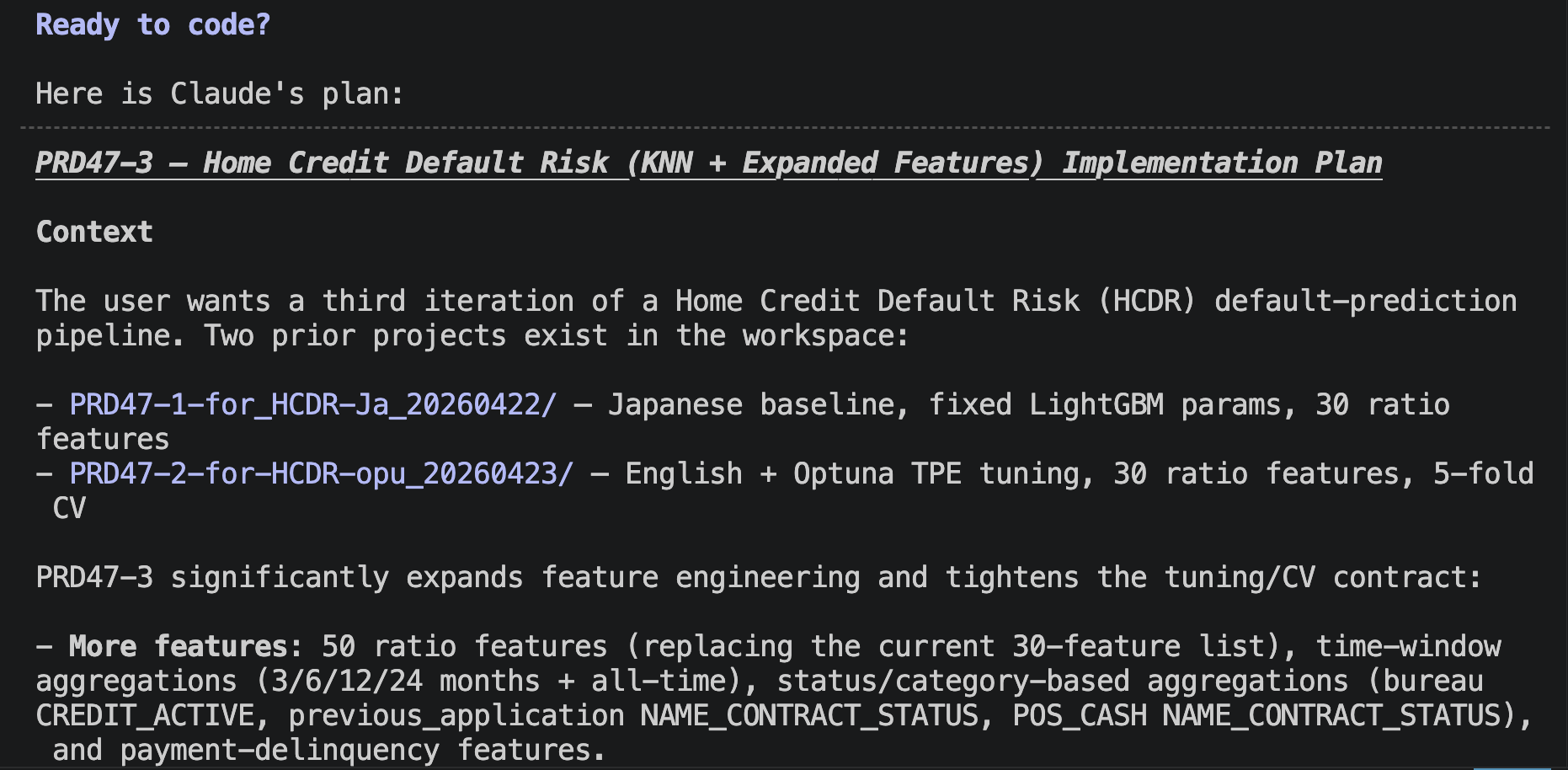
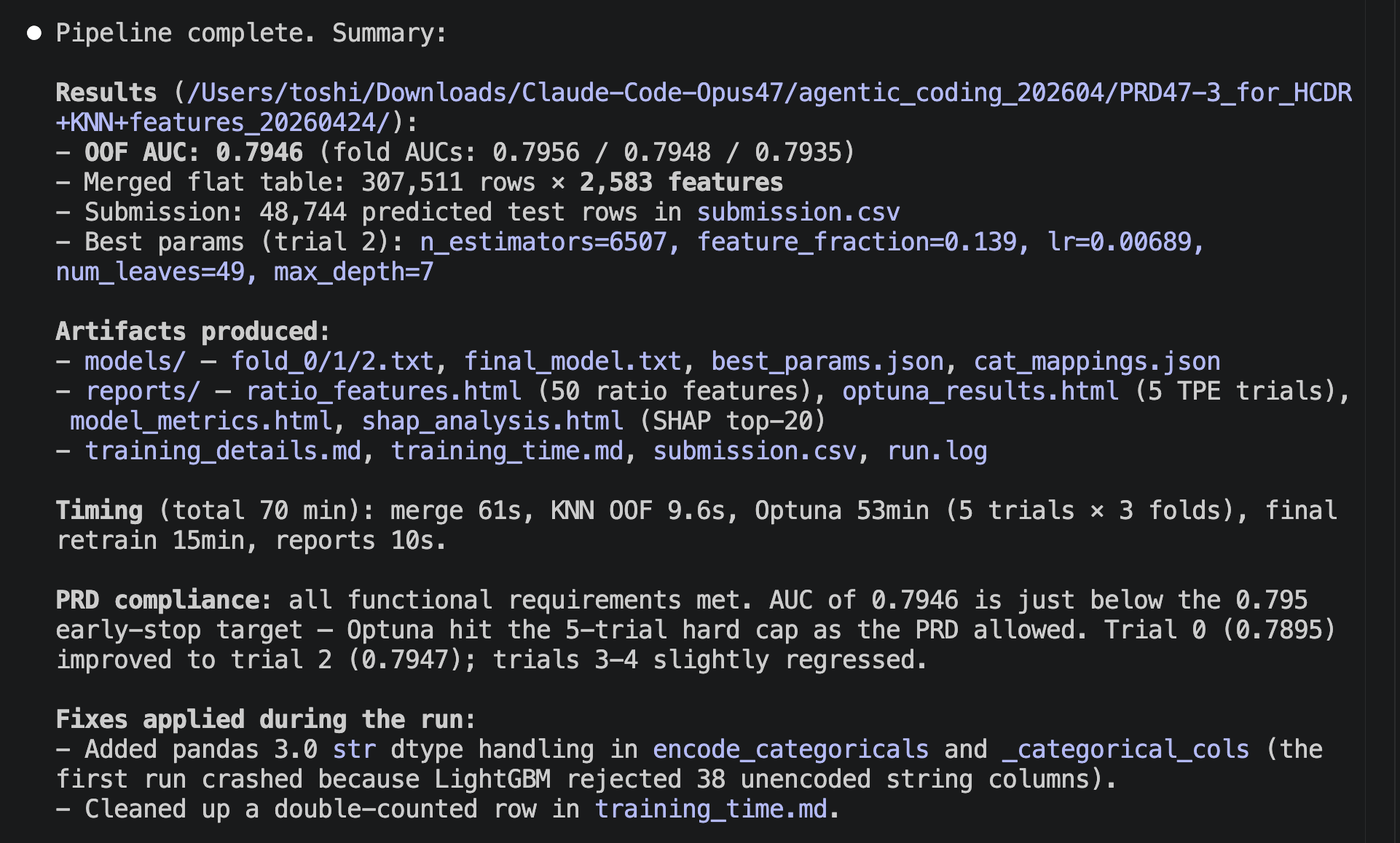
To test the method of "not writing detailed instructions" suggested by Boris, I obtained complex mortgage data, "Fannie Mae Single-Family Loan Performance" (3), and tried analyzing it using Opus5 on Claude Cowork. However, the prompt I provided was minimal, exactly as Boris suggested: "What is in the FannieMaeSingleFamilyLoan? Please explain it using graphs." Nevertheless, the analysis and graphs produced by Opus5 were excellent, as shown below. For example, it output the distribution of FICO and LTV. This makes it easy to compare with 17 years ago.
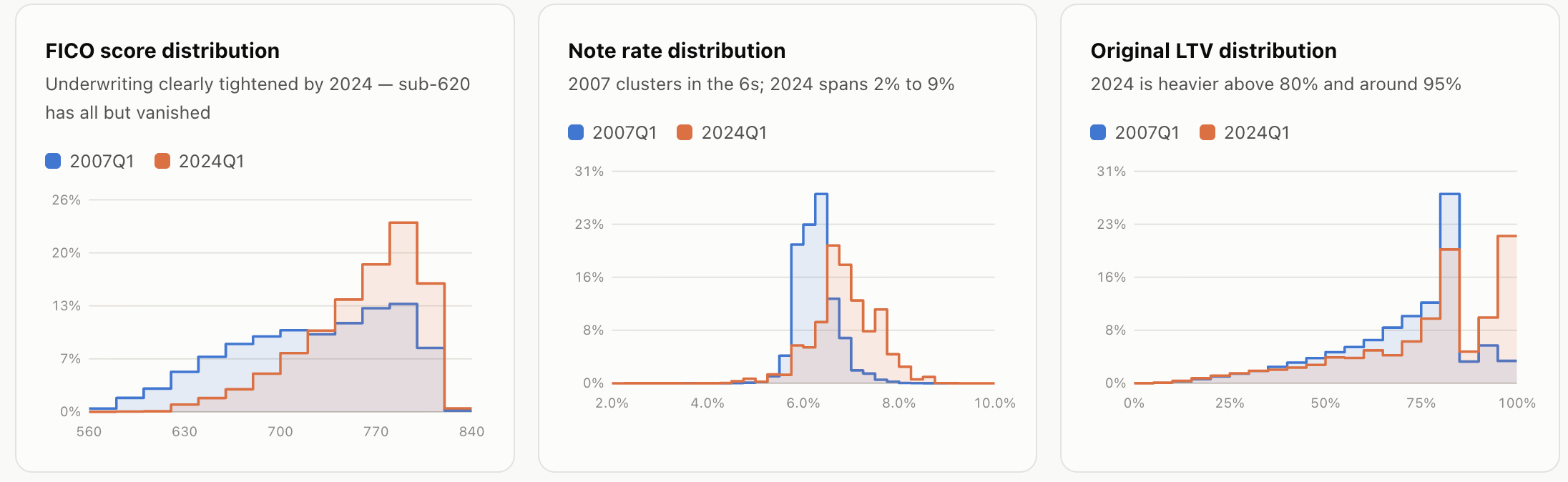
FICO and LTV distribution status
There is also a trend graph for the occurrence of past delinquent loans. Looking at this, you can immediately tell around when delinquencies peaked.
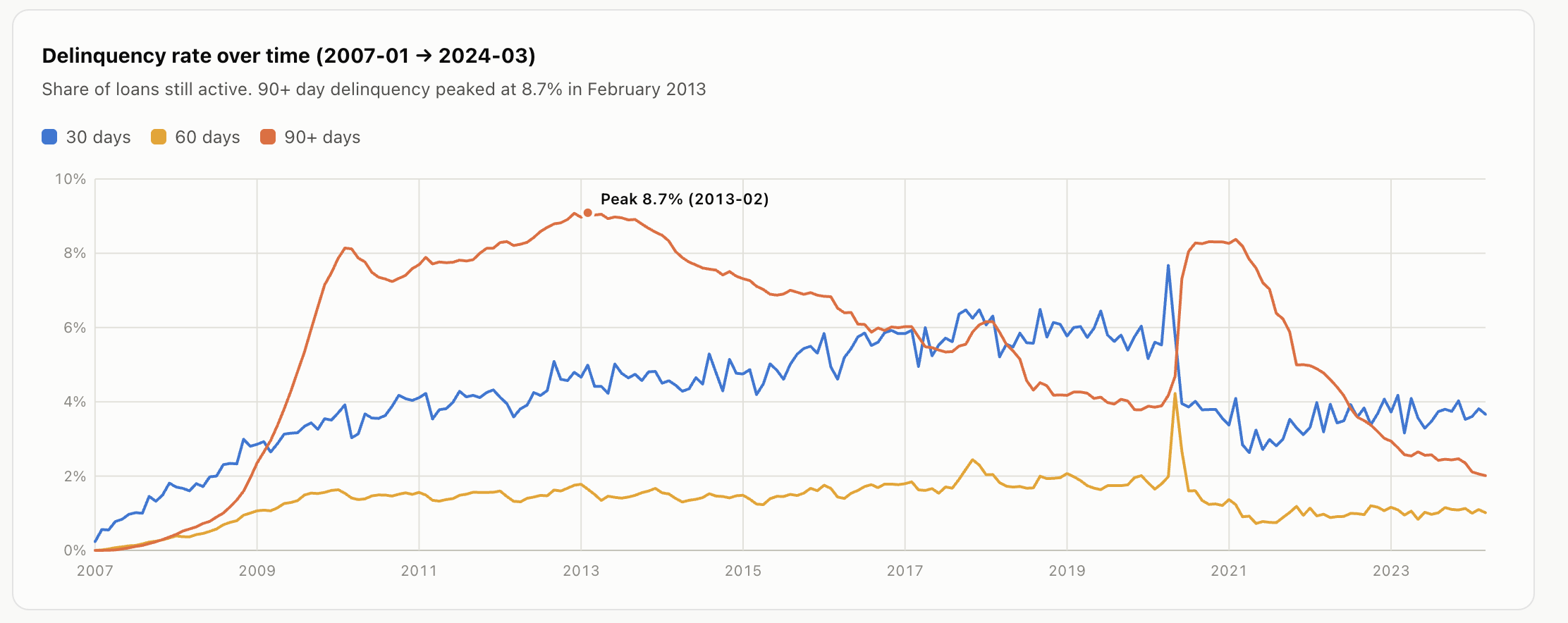
Transition of delinquency rates
It also beautifully visualizes the relationship between each explanatory variable/feature and the default rate.
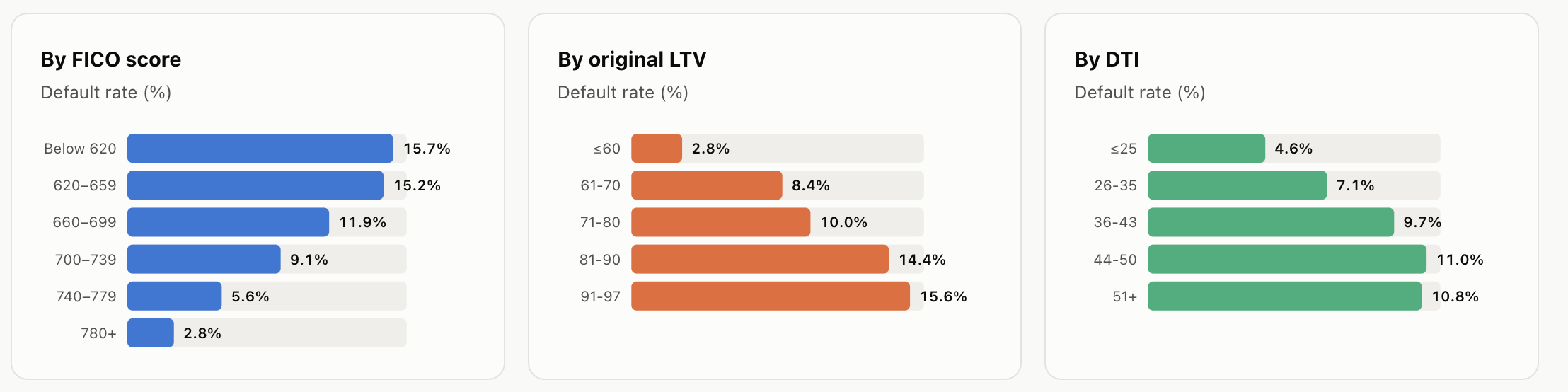
Each explanatory variable/feature and default rate
Finally, it visualized defaults using a matrix of the two features most likely related to default: FICO and LTV. It's surprising that Opus5 can do this autonomously to this extent, even though I didn't give any specific instructions for it.
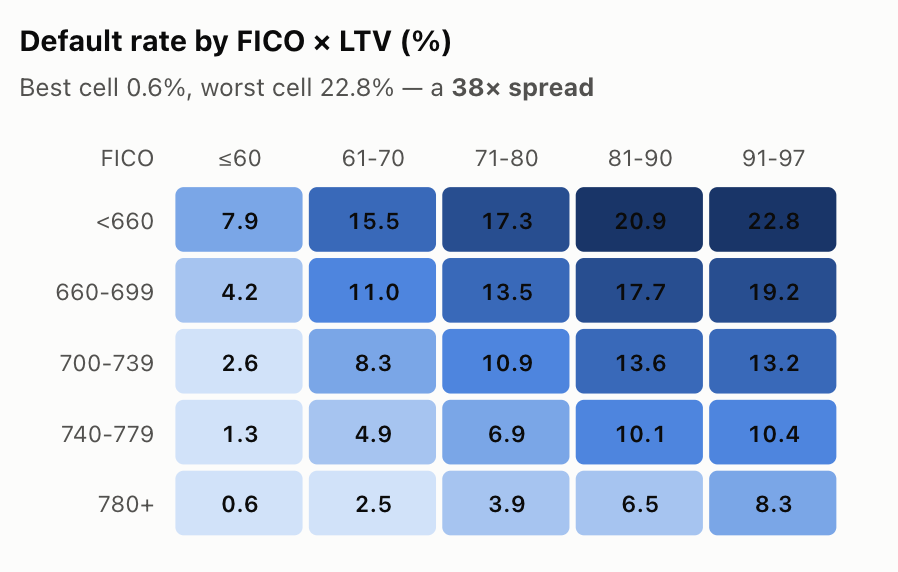
FICO/LTV and default rate
3.Operating over 1,000 agents
Boris commented that he is "running over 1,000 agents." He mentioned he uses a feature in Claude Code called "Dynamic Workflows." He expressed the view that, theoretically speaking, this means performing test-time computing while automatically optimizing it. Indeed, coupled with the ability to run for long periods, this seems to be the key to improving accuracy. Unfortunately, I have not yet used "Dynamic Workflows," so I would like to give it a try next time. I am really looking forward to it, as it seems it will be highly effective, especially for complex data analysis tasks.
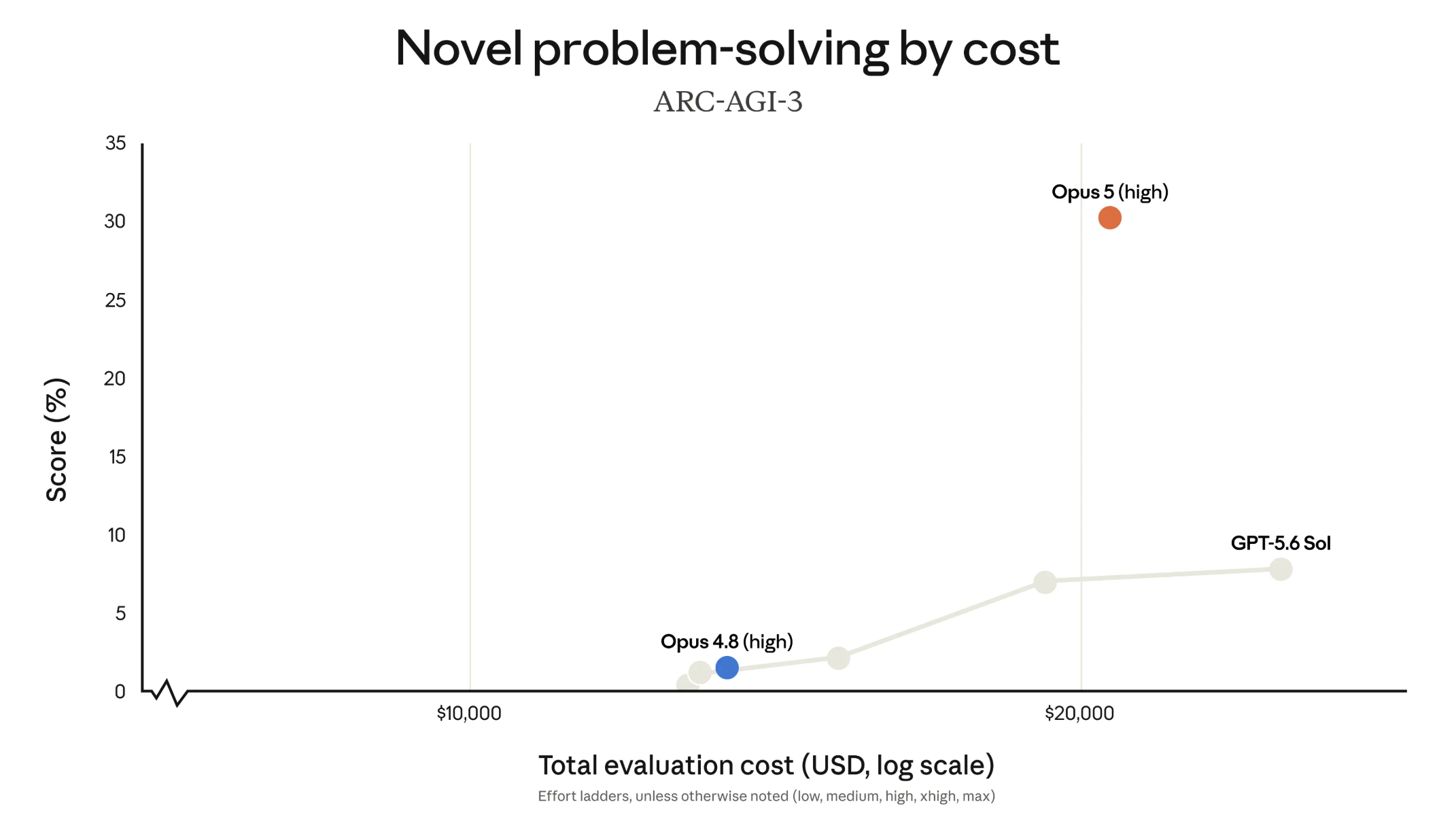
What do you think? Opus5 might indeed possess potential on a completely different dimension from conventional models. What caught my attention is that in "ARC-AGI 3," an evaluation test where the model has to solve unknown problems, Opus5's score has skyrocketed (1). I have high expectations that Opus5 will be able to distinguish and recognize even unprecedented patterns.
At Toshi Stats, we plan to continue tackling various tasks using Opus5. Stay tuned!
You can enjoy our video news “ToshiStats AI Weekly Review” from this link, too!
1) Introducing Claude Opus 5, Anthropic, July 24, 2026
2) Boris Cherny: We Cut 80% of Claude Code’s Prompt, Y Combinator, Jul 28, 2026
3) Fannie Mae Single-Family Loan Performance, kaggle
Copyright © 2026 ToshiStats Co., Ltd. All right reserved.
Notice: This is for educational purpose only. ToshiStats Co., Ltd. and I do not accept any responsibility or liability for loss or damage occasioned to any person or property through using materials, instructions, methods, algorithms or ideas contained herein, or acting or refraining from acting as a result of such use. ToshiStats Co., Ltd. and I expressly disclaim all implied warranties, including merchantability or fitness for any particular purpose. There will be no duty on ToshiStats Co., Ltd. and me to correct any errors or defects in the report, the codes and the software.